

MSLNxCD276 bicistronic CAR-T
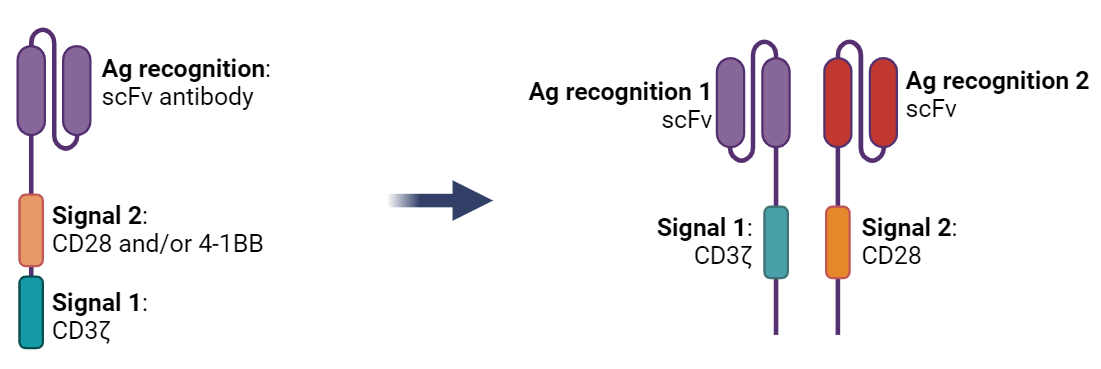
Conventional CAR-T cells integrate antigen recognition, CD3ζ activation, and co-stimulatory signaling within a single receptor. This design provides strong cytotoxicity against a single antigen and is supported by extensive clinical experience. However, antigen loss may lead to tumor escape, while antigen expression on normal tissues may cause on-target, off-tumor toxicity.
AND-gate CAR-T cells separate Signal 1 and Signal 2 into two receptors recognizing different antigens. Full activation is preferentially induced when both antigens are present on the same tumor cell, improving tumor specificity and reducing the risk of attacking normal cells that express only one antigen.
However, dual-antigen recognition may reduce activity against tumors with low or heterogeneous antigen expression. Signal separation may also weaken cytotoxicity, while receptor design and antigen-pair selection increase development complexity. Our platform aims to balance potent antitumor activity with improved tumor-specific safety.
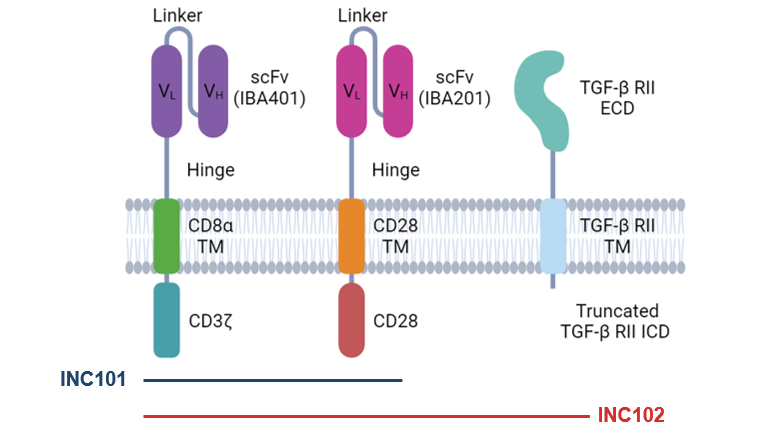
AND-gate design separates antigen recognition for Signal 1 (CD3ζ) and costimulation (Signal 2) — so killing is driven preferentially where both antigens are present, sparing cells that carry only one. The armored INC102 candidate adds a dominant-negative TGF-β receptor to resist the immunosuppressive microenvironment.