

CD19xCD22xCS1 trivalent CAR-T
CD19×CD22×CS1 trivalent CAR-T is a multi-target cell therapy platform designed to address both B-cell malignancies and plasma-cell malignancies within a single construct. In this framework, CD19 and CD22 serve as recognition modules for B-cell diseases, while CS1 targets plasma-cell disorders, including multiple myeloma. This approach is built on the concept of moving beyond single-antigen dependence to create an integrated platform that can cover distinct hematologic cancer biology.
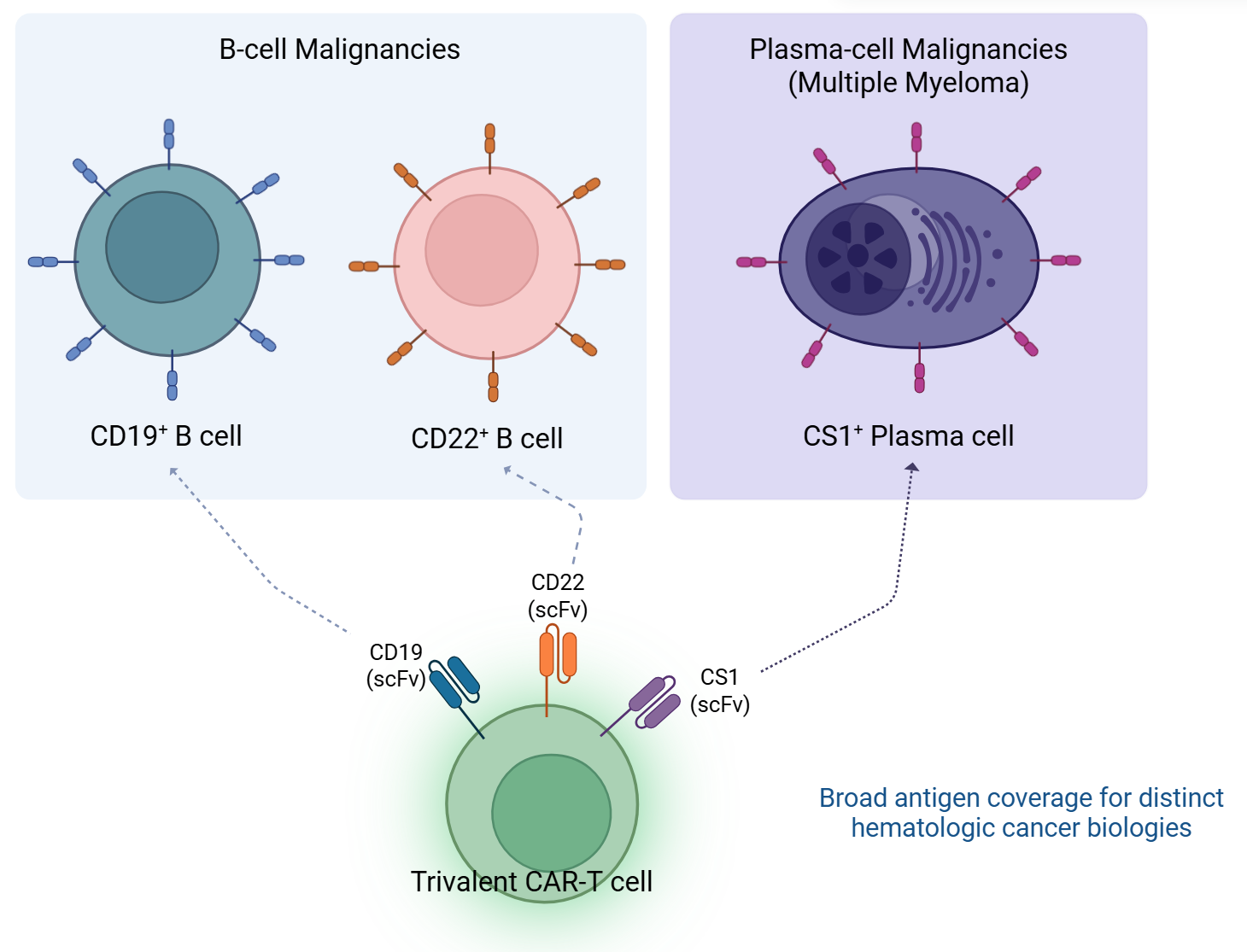
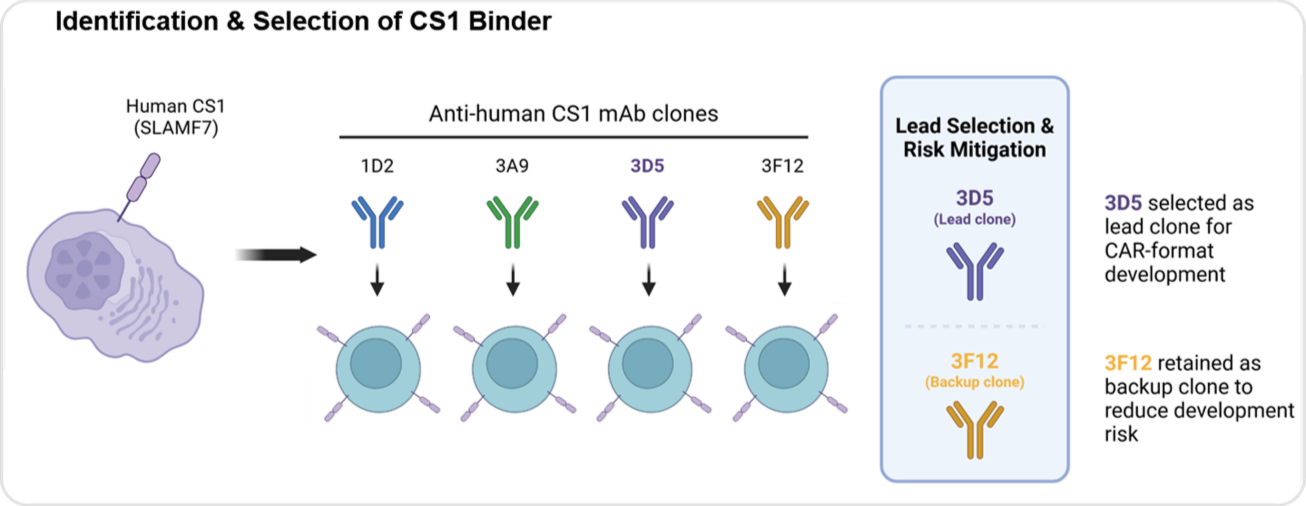
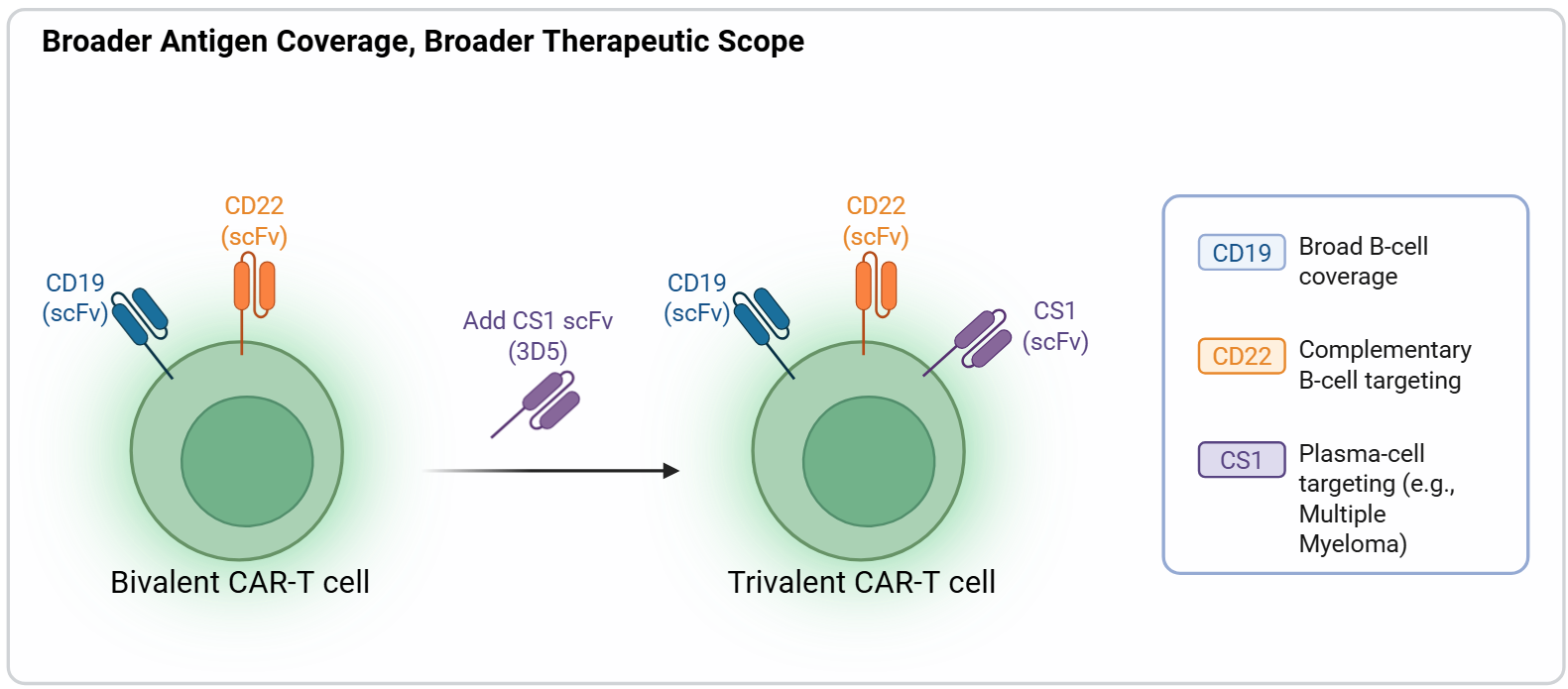
CD19×CD22×CS1 trivalent CAR-T is built by incorporating a CS1-derived recognition module into an existing dual-target CAR framework. To identify the most suitable binder, multiple anti-human CS1 monoclonal antibody clones were generated and screened, including 1D2, 3A9, 3D5, and 3F12. Among these, 3D5 was selected as the lead clone for CAR-format development based on its overall performance, while 3F12 was retained as a backup clone to reduce development risk and preserve an alternative engineering path. This strategy reflects the fact that antibody behavior can change after reformatting into a CAR binding domain, making cellular validation an essential step. In preclinical testing, CS1 recognition was confirmed after scFv reformatting, supporting the feasibility of using the selected binder as a CAR component. The final trivalent architecture is intended to preserve the established CD19/CD22 targeting logic while adding a third layer of recognition for CS1-positive cells, thereby expanding the platform’s therapeutic scope through modular antigen targeting.